Daylight was crushed into darkness. Torrential rain fell like a waterfall, and Guangzhou's neon lights blurred into a haze behind the downpour. An ambulance pierced the curtain of rain, racing through the gates of the Third Affiliated Hospital of Southern Medical University.
As the vehicle halted, soaked figures sprang into action. Several umbrellas quickly clustered over the transfer bed, shielding a tiny body beneath. A small hand,knuckles white,gripped the bedsheet tightly. Nine-year-old Xia Le blinked silently amid the unfamiliar lights and clamor of the city, bearing the exhaustion of a ten-hour journey—his neck immobilized, legs limp.
No one knew whether this six-hundred-kilometer race against death would bring him the stability he desperately needed.
Four days earlier, the phone at the Guangzhou Chunhui Care Home rang urgently.
A medical coordinator picked up the phone and heard: an orphan at a welfare institution had suffered atlantoaxial dislocation. After more than a month of ineffective local treatment, his condition was worsening—he needed immediate transfer!
The coordinator immediately contacted the pediatric orthopedics director at the Third Affiliated Hospital. After reviewing the scans and medical records, the doctor didn’t hesitate:
“Send him here by ambulance right away! His neck must be immobilized throughout—there’s no room for error!”
In great haste, an ambulance, a bed......
everything ne-cessary scrambled into place just barely.
The transfer was set for 8:00 a.m., but the boy’s complex condition required painstaking handovers between doctors, delaying departure until 10:00 a.m.
The usual six-hour journey took ten hours this time. The ambulance crawled forward as if walking on thin ice.
That night in Guangzhou, the rain poured relentlessly. Under an umbrella, the motionless boy lay heartbreakingly still. By the time paperwork was complete and he was settled in bed, it was already past 9:00 p.m.
The test results weighed heavily:
Developmental atlantoaxial dislocation with an os odontoideum, Down syndrome, bronchial asthma, congenital heart defects, otitis media, pleural effusion—
life had stacked heavy burdens on his small frame. His fragile cervical spine, like a crumbling pillar, could collapse at any moment.
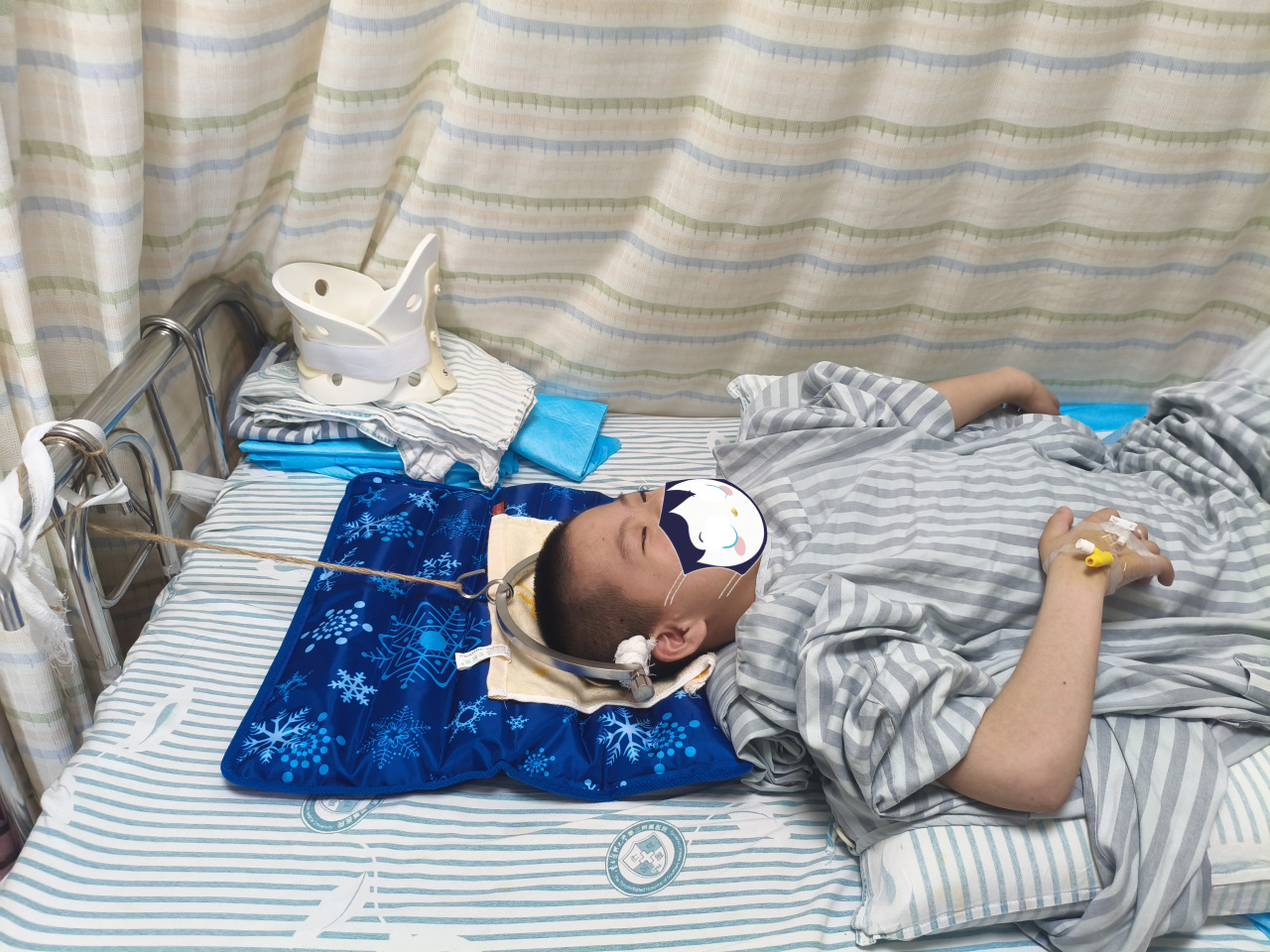
On April 30, the boy’s painful cranial traction realignment began with a cold traction frame affixed to his skull.
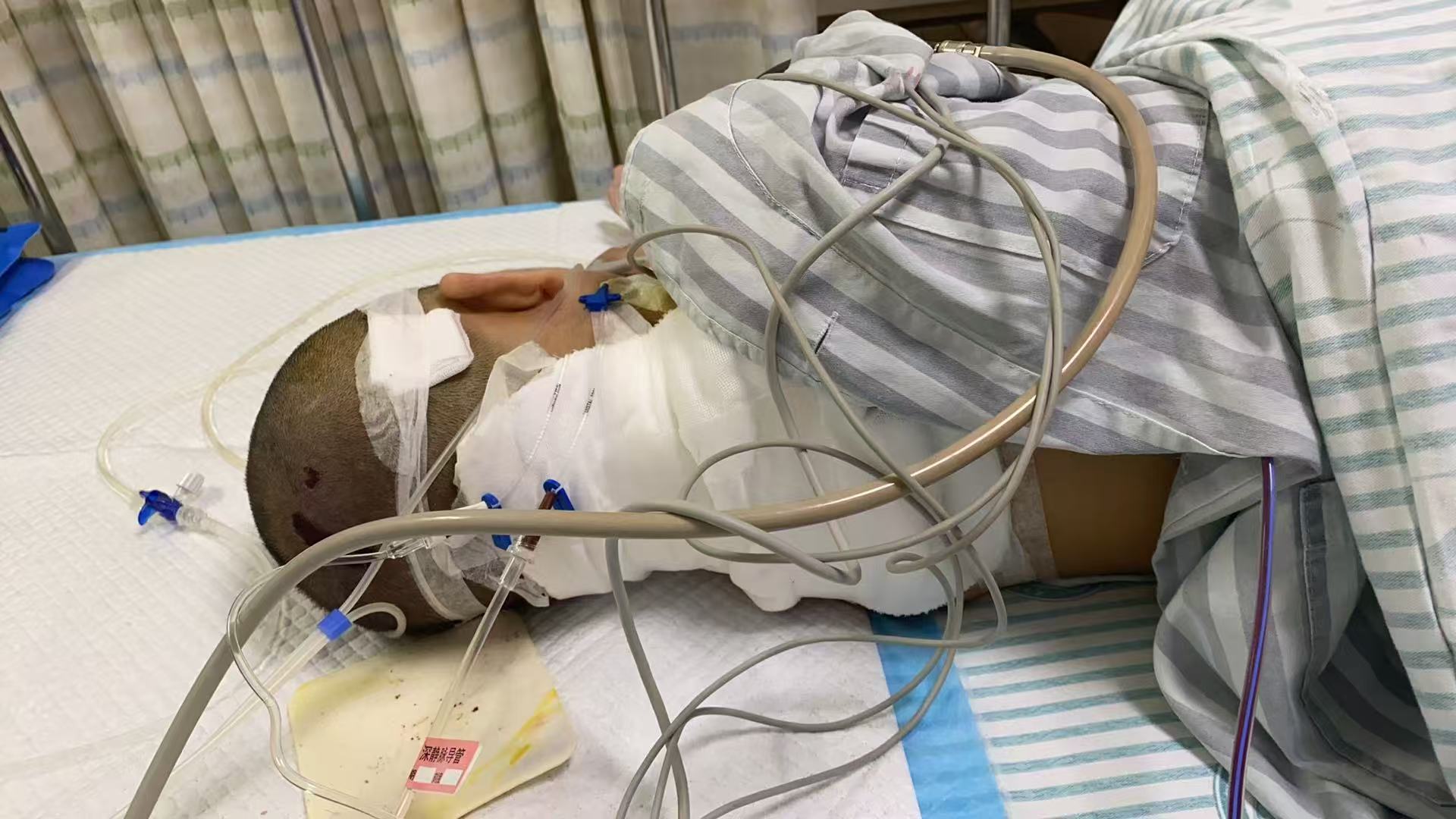
On May 7, he was wheeled into the operating room again. Under general anesthesia, doctors carefully created a posterior access point to insert screws and fixation rods—a posterior C1-C2 fusion and pedicle screw fixation.
This was the only way to rebuild the foundation of his life.
Inside the silent operating room, precise hands worked steadily while outside, hope and prayers lingered anxiously in the waiting hall.
On May 17, Xia Le was discharged, but far from being strong enough to return to the welfare institution. The Guangzhou Chunhui Care Home became his temporary harbor.
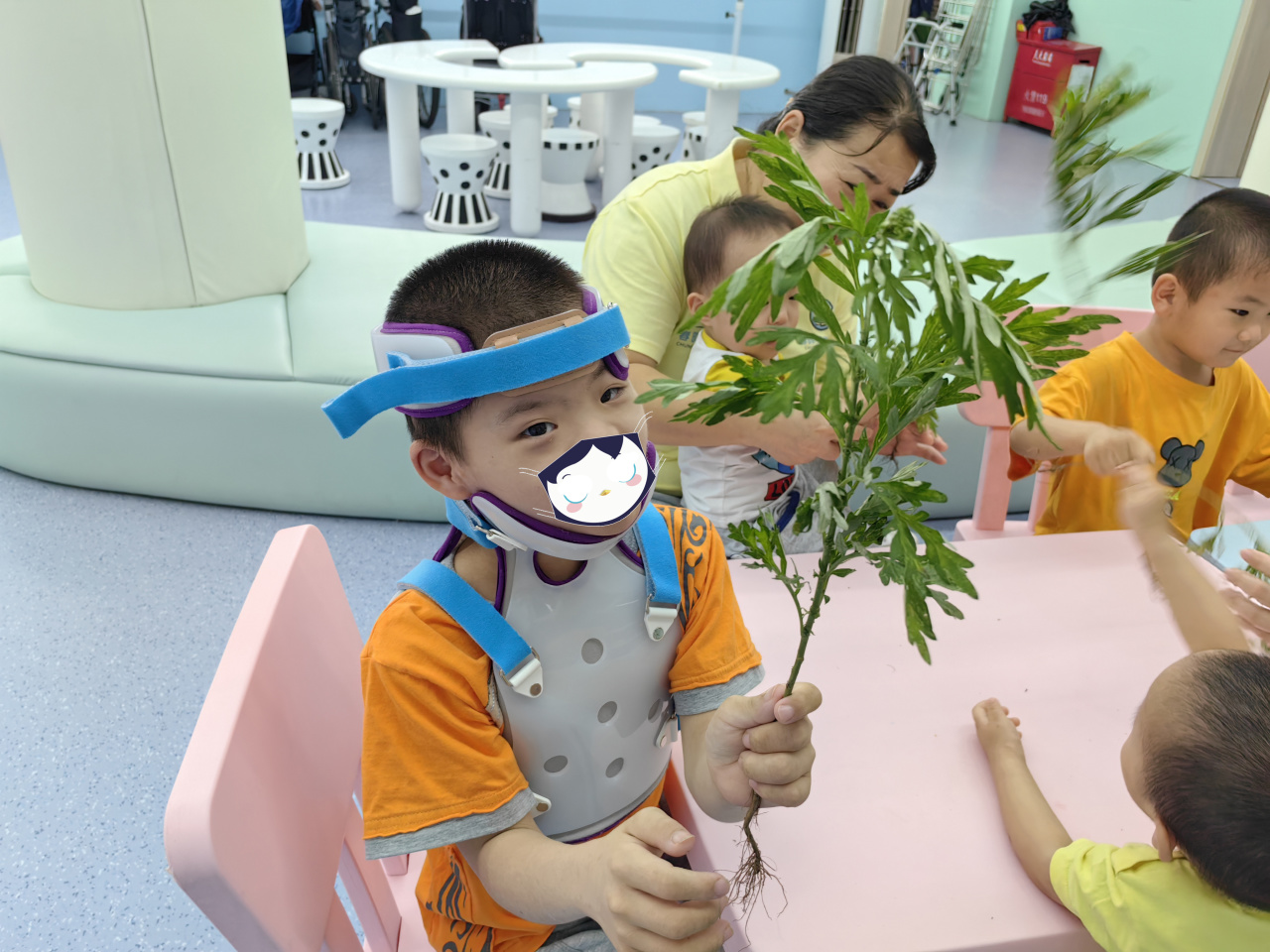
When they first met, Xia Le’s eyes brimmed with anxiety. Mama Zhang from the Care Home gently took his hand and said, “Let’s go home—there are lots of kids waiting for you!”
As she carefully fitted his orthosis and went through the medical instructions, his tense expression softened, and his lips curved into a shy but clear smile.
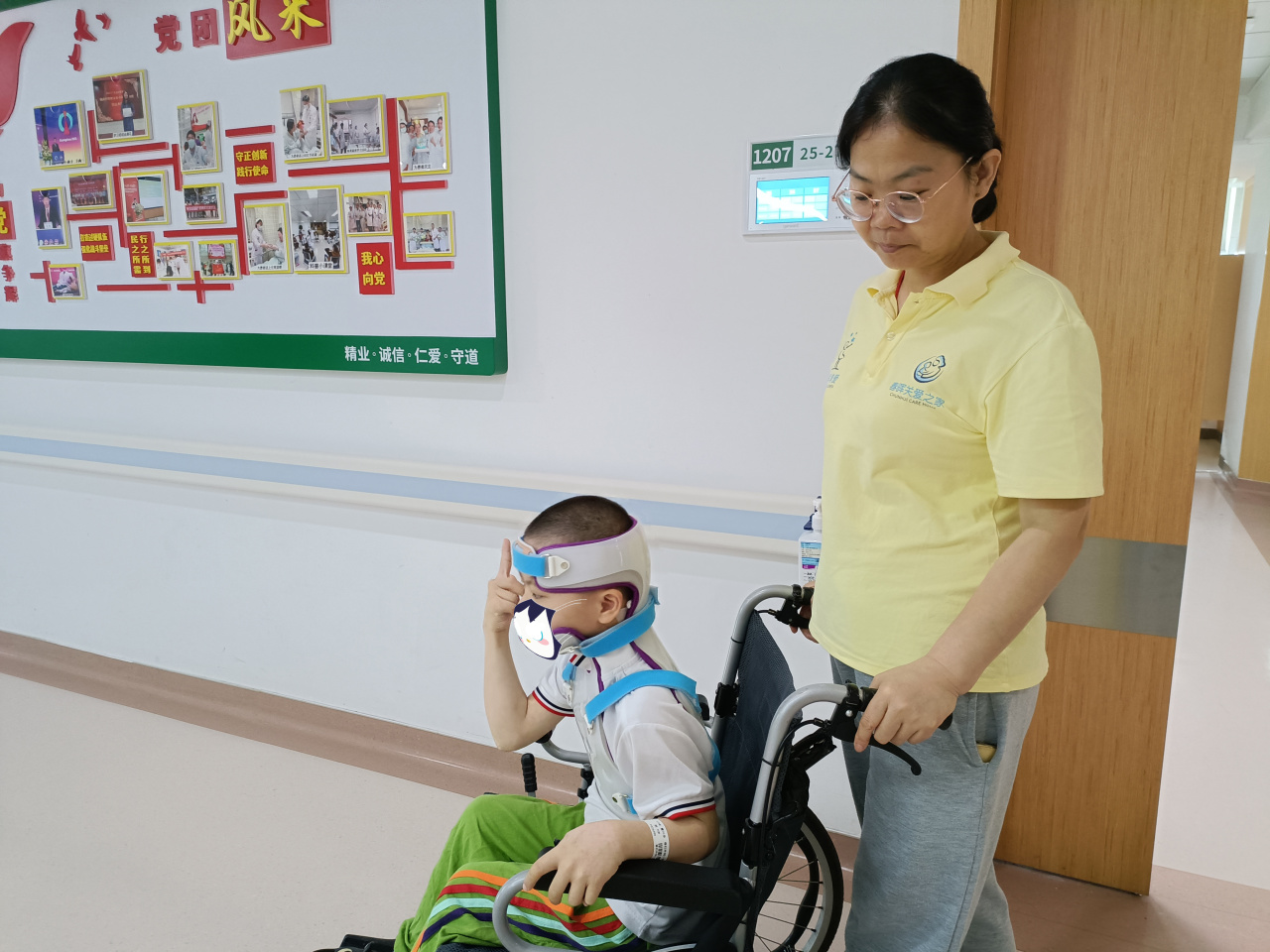
As they left the ward, a heartwarming scene unfolded: he reached for Mama Zhang’s hand and slowly walked toward the nurses' station. Turning back, he let out a cheerful “eh-eh” sound—his clumsy but heartfelt way of saying goodbye. The pure joy on his face instantly lit up the otherwise sterile hallway.
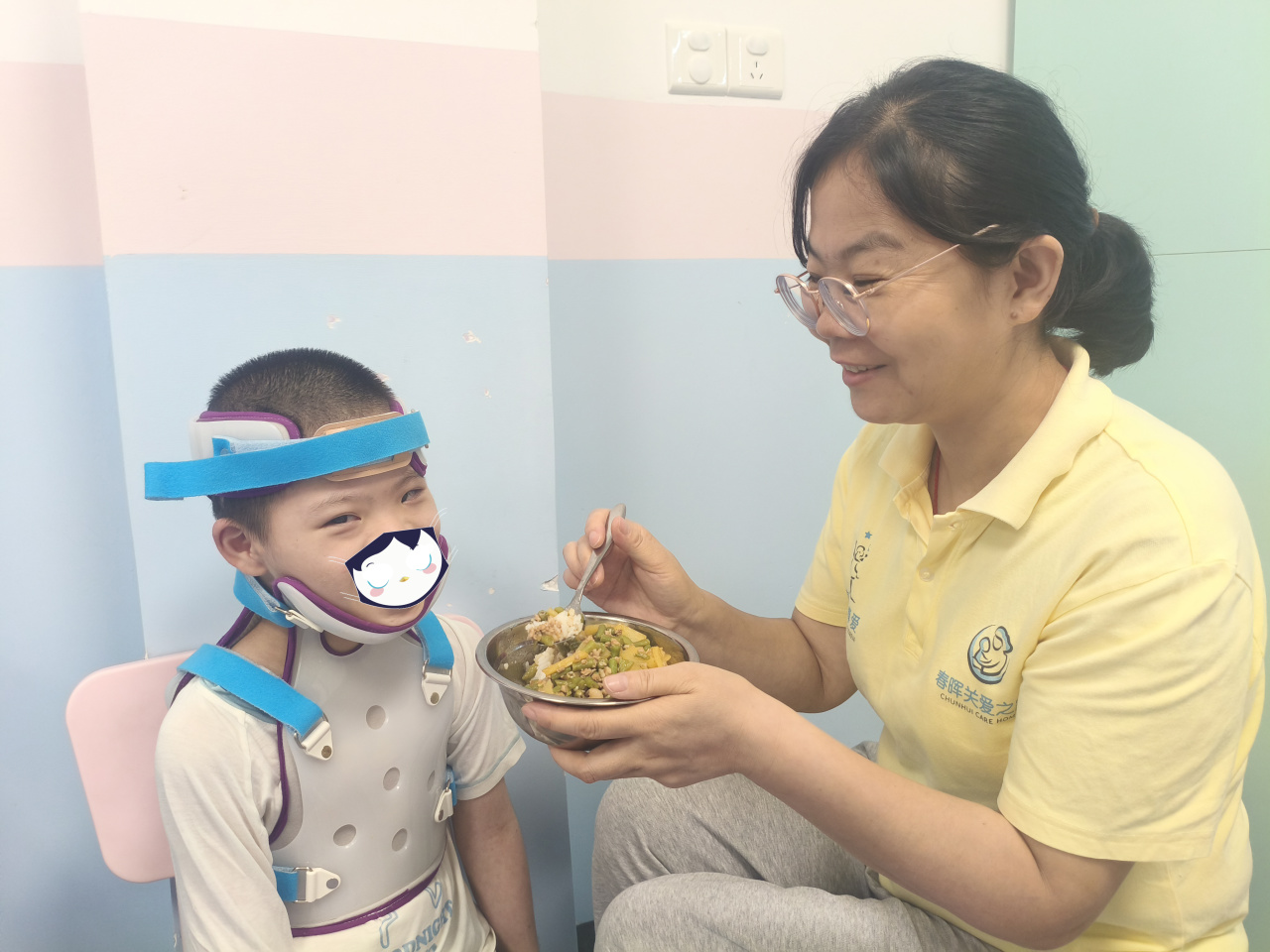
It was lunchtime when they returned to the Care Home. At first, he dodged the spoon offered to him. But upon seeing other children enjoying their food nearby, curiosity and hunger awoke. He began cautiously, then started eating heartily.
During nap time, Mama Zhang helped him remove his orthosis. The moment the restraint came off, his mouth quivered and his eyes turned red. She gently comforted him, and suddenly, he flung his arms around her and hugged tightly. His tears kept streaming down his face, but a smile bloomed again.
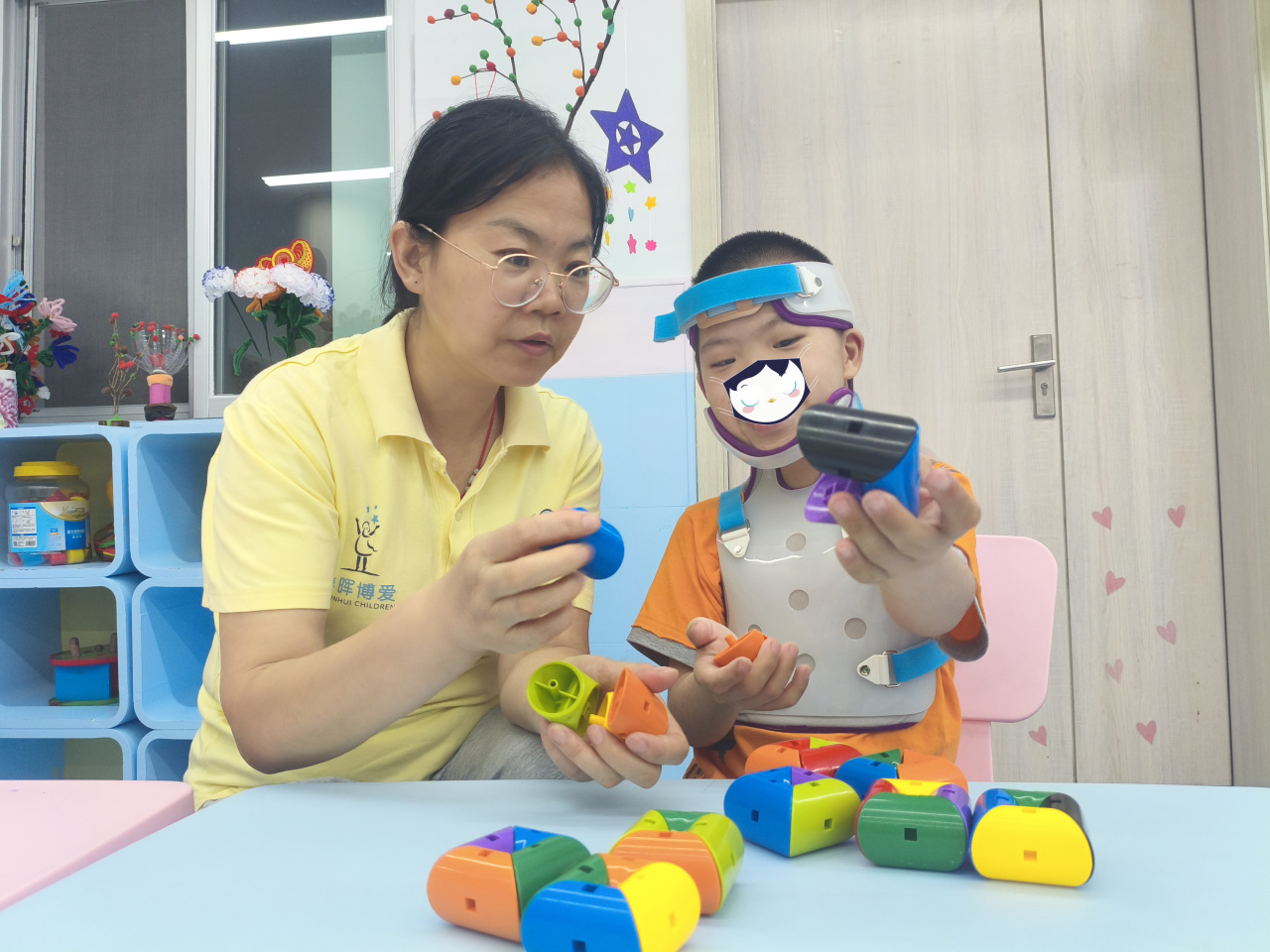
His favorite activity was building blocks. Every time he managed to piece together a shaky little tower, he’d eagerly call out “eh-eh,” inviting others to admire his work. A sincere praise “Great job!” would make his smile burst like sunlight through clouds—pure and full.
During rehab, he would often pause mid-walk to search for Mama Zhang’s face. The moment their eyes met, he’d respond with a trusting grin. When tired, he would sit for a rest, then muster his energy and get back up.
In just half a month, the changes were remarkable:
The boy who once had to be carried and spoon-fed could now walk steadily on his own and hold a spoon to feed himself. He had regained a small, tangible sense of control over his life.
Now, the day to return to the welfare institution is drawing near.
Xia Le still cannot speak, but with his smiles, his outstretched hands, his carefully stacked blocks, and his steady steps, he responds clearly to the kindness the world has offered him.