At the welfare institution, little Wu was always curled up in a corner. Born with a disability in his legs, he was abandoned here as a newborn—so quietly that not even a loud cry could make his parents turn back. The world inside the orphanage, with its ever-changing strangers, was all he had ever known.
Then Shanqin opened the door of his room. She was a “Chunhui Mama” in the Chunhui Family Program—not a biological mother, but a true beam of light shining into little Wu’s gray childhood.
Mama Zhang Shanqin flipped through a photo album and paused at a faded picture. Three-year-old Wu was riding a red tricycle, a copper bell jingling from the handlebars, wobbling around like a joyful little deer galloping through his kingdom. The tricycle had been a gift from the orphanage, and the rumbles of its wheels while crushing on the ground had once been the fondest music of their Chunhui family.
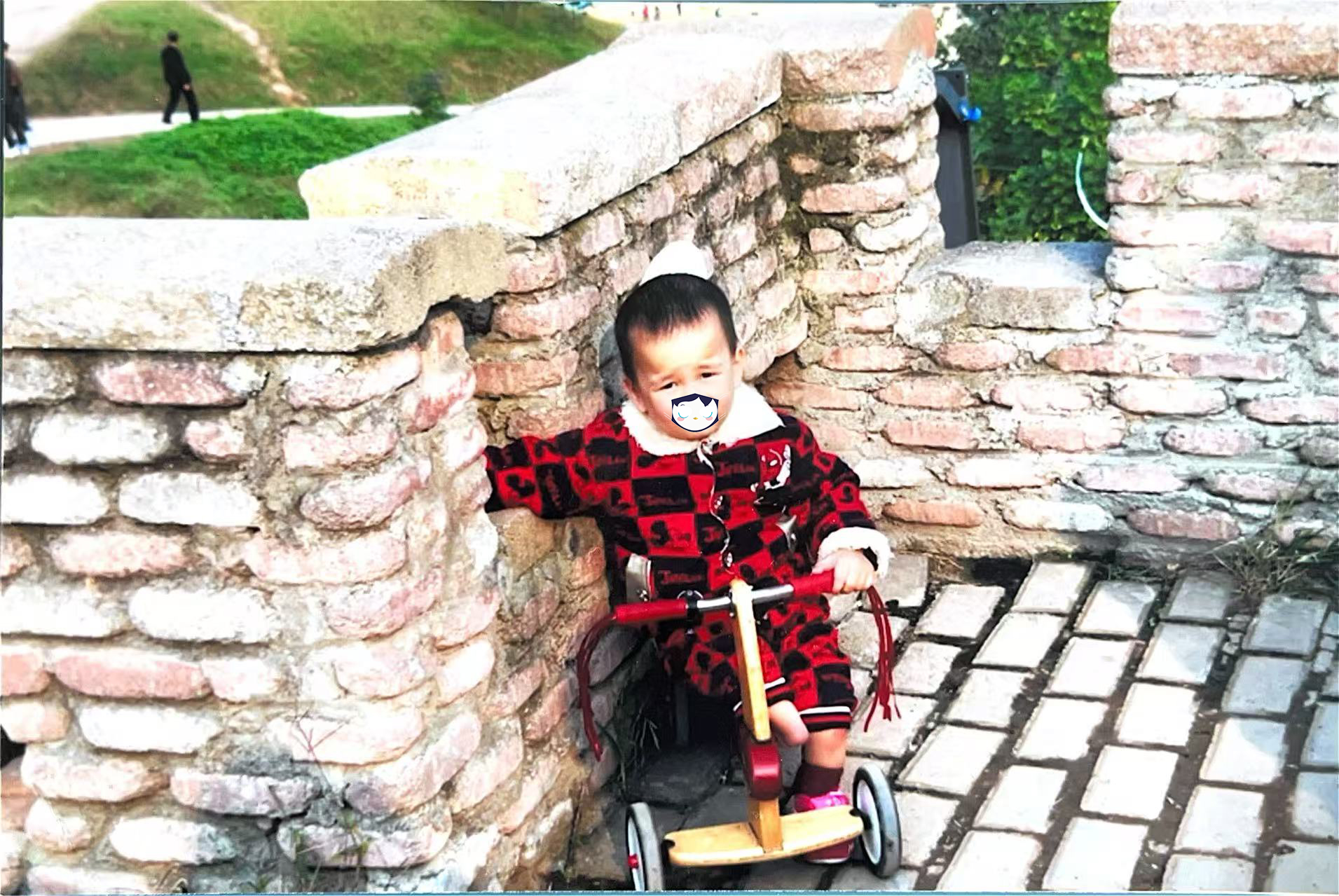
But the accident came without warning. One weekend, the tricycle chain snapped. Mama Shanqin spent an entire afternoon on the balcony trying to fix it. Her fingers were stained with grease, but the wheels refused to turn. Little Wu clung to the handlebars in a daze, his small shoes scraping the floor, the sparkle in his eyes dulled.
“Mama, my trike is broken,” he whimper-ed, voice trembling. That simple sentence tugged at Mama Shanqin’s heart. She knew this wasn’t just about a toy breaking—this was a door to the world slamming shut for a child desperate to explore it.
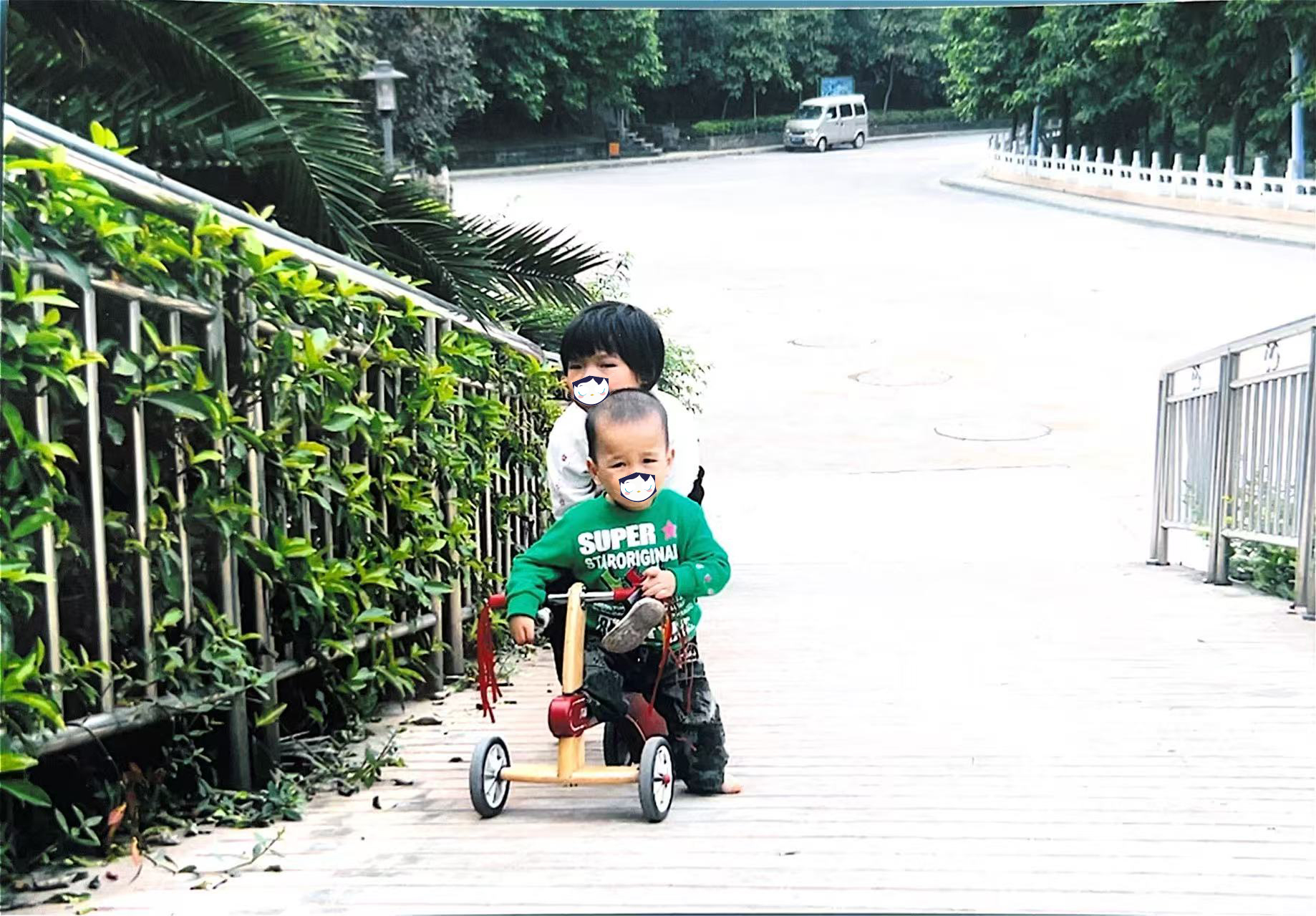
Without the tricycle, Wu had to shuffle slowly around the coffee table. Mama Shanqin soon noticed that his right foot was congenitally underdeveloped, and his left foot tiptoed awkwardly with every step, leaving him breathless after just a few paces.
One afternoon, she dug out some leftover yarn from a sweater she had once knitted for him, and found an old cloth shoe that no longer fit him. She cut and stitched the pieces together, crafting a makeshift “sock boot.” The yarn edges were a bit rough, so she singed them carefully with a lighter, afraid they might chafe his skin. When Wu wore the boot—still warm from her hands—and teetered from the coffee table to the couch, taking only three steps, Mama Shanqin's eyes filled with tears.
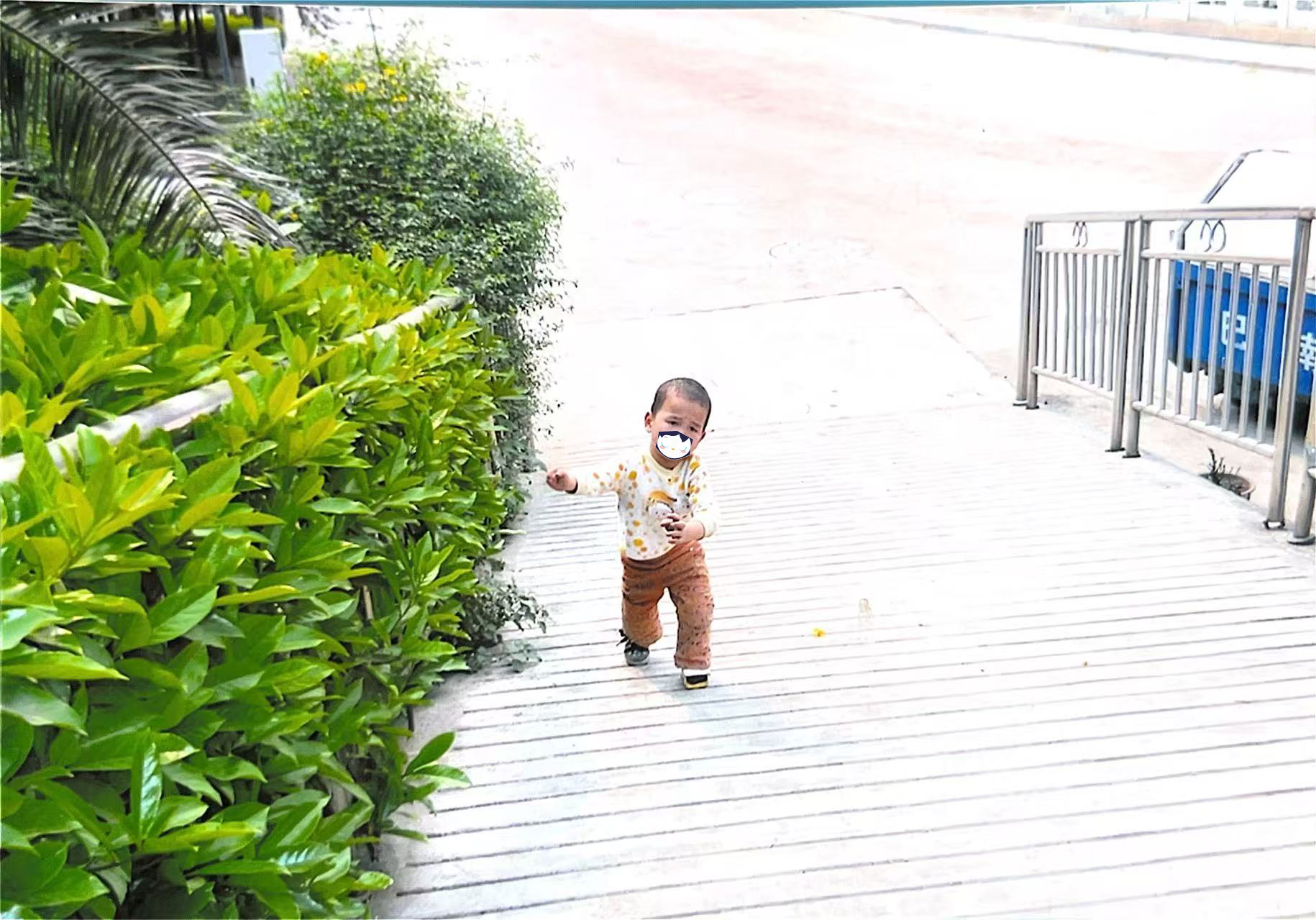
Shanqin’s husband, Wu’s loving foster dad wasn’t idle either. He found a thick plane-tree branch on the balcony and sanded it smooth all night long until it shone like polished glass. Then he wrapped it with non-slip fabric.
“Come on, Wu,” he said, kneeling a few meters away, holding out the stick like a wand. “Grab your magic staff, and we’ll go somewhere far.”
Wu bit his lip, gripped the stick with his tiny hands, and wobbled forward one deter-mined step at a time. At first, he often fell, his knees covered in bruises. “Mama, I don’t want to walk anymore,” he cried. But Mama Shanqin always knelt beside him, gently wiping away his tears:
“Wu, you’re the bravest little man I know. We’ll take it slow—one day, you’ll run on your own.”
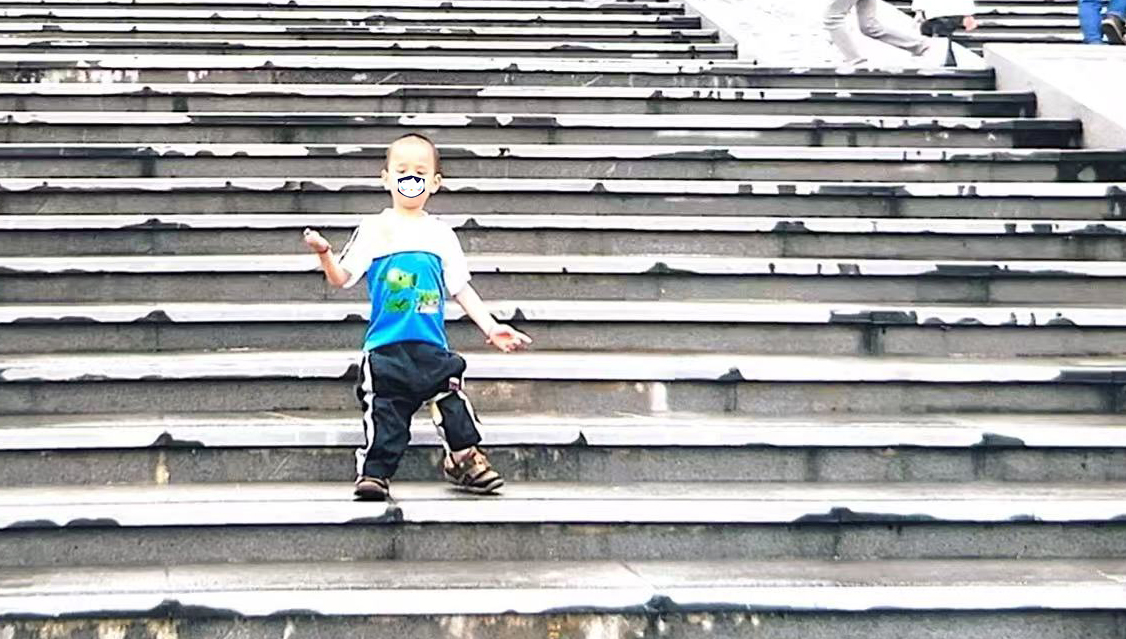
Then, as if luck had been waiting quietly in the wings, it arrived. On their way to preschool, they passed the rehabilitation clinic, where Director Zhang happened to spot little Wu. She immediately noticed his gait, knelt to examine him, and pulled out her phone to call in some resources.
“Don’t worry. We can apply for orthope-dic shoes and professional therapy.”
Her words were like sunlight pouring into their home, igniting hope.
Three months later, a pair of custom orthopedic shoes arrived. The leather gleamed, the heels were reinforced, and the soles were etched with anti-slip patterns. The moment Wu put them on, he was like a bird finally stretching its wings. He wobbled but walked steadily toward the door—and turned back to give Mama Shanqin a radiant smile.

The days of rehab were long and grueling. Mama Shanqin accompanied Wu every day to the rehab room, watching him fall and rise again on the balance beam, adjusting his steps on the treadmill. Every bit of progress—even half a step more—was cause for celebration.
“Good thing we caught it early,” the therapist once said. “He’s recovering far better than expected.”
Her words filled Mama Shanqin with both relief and gratitude. They hadn’t missed the window—they had given him a chance.
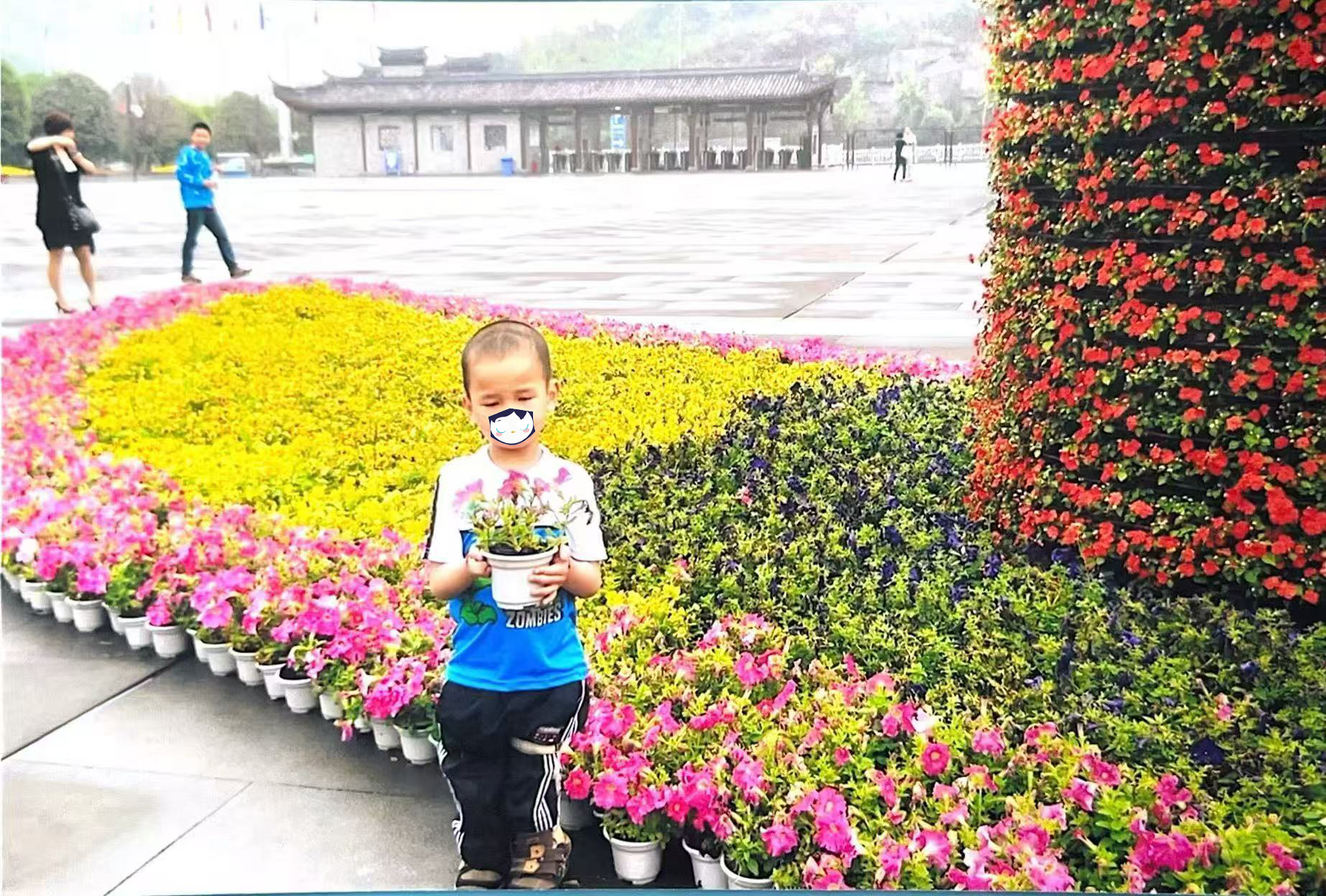
Now, their photo album was growing fuller by the day: Wu in his orthopedic shoes watching dinosaurs at the zoo, running through flowers at the Garden Expo, laughing as he flew a kite during a spring outing. His steps were steadier. His eyes shone with confidence and courage.
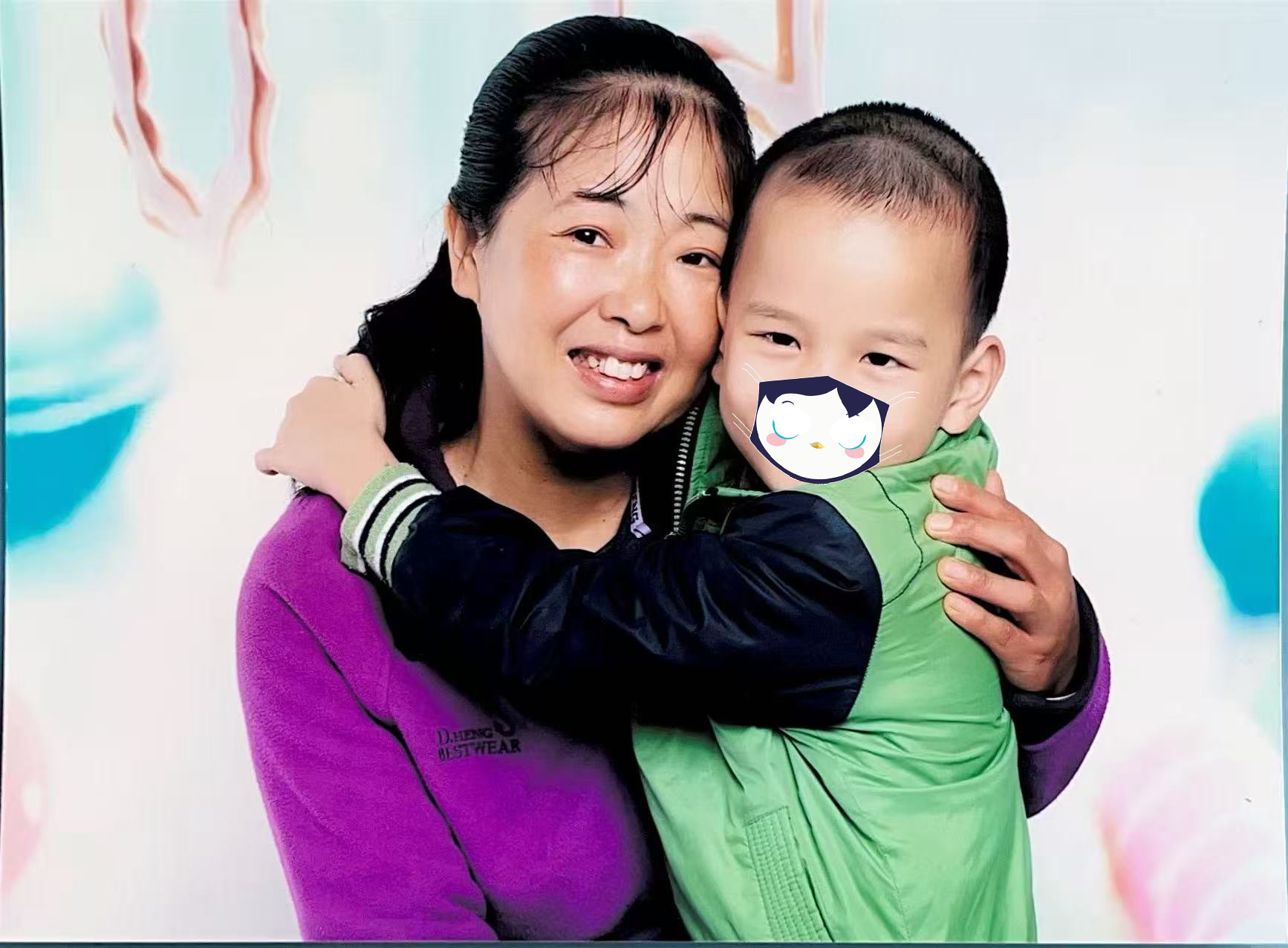

Twenty-five years have passed—enough time for children to grow up, for black hair to turn gray, and for a belief in love and protection to take root and blossom into countless moving stories.
On the occasion of Chunhui Children’s “Mama’s Time Museum” and the 25th anniversary of the program, we’ve chosen 25 cherished objects to launch a journey of memory and reflection.
We hope to reveal:
Motherhood is not a one-way sacrifice, but a mutual process of nurturing and growth between a mother and a child.
Being a mother isn’t about achieving perfection—it’s a living diary full of folds, revisions, and even tear stains.
Because only what’s real holds true power.