This is a journal from the Chunhui Village Program. It records the daily routines of the program children and social workers. From these routines, ordinary or special, we learn how those withdrawn and timid children grow to be open and brave. And in each of these stories, we see the love and hope Chunhui Children’s Foundation has brought to the children.
1. The boy who locked himself in the room all day long
The first day after I had received Chunhui Children’s social worker training, I met Bai for the first time. Led by the senior trainer Zhou Dan, we went to Bai's home. The moment we walked in, we heard his uncle sigh helplessly: "This kid has locked himself in the room again." As he said this, he pushed open the door of Bai’s room—the tall and thin boy was sitting quietly on the bed, eyes glassy, pants slightly short and fingers twisting together restlessly like a small frightened beast.
From his uncle, we learned about Bai's life: his father passed away when he was three, and his mother left home and lost contact shortly after. He grew up under the care of his grandparents, and when they passed away, his uncle became his guardian. He seldom knew the love of a family. His aunt often spanked and scolded him for being the worst academic performer in his class and for stealing things from the neighborhood shops. A "freeloader" , as she named him. Eventually he spent nearly a year away from home. Obsessed with his smart phone, he often locked himself in his room all day.
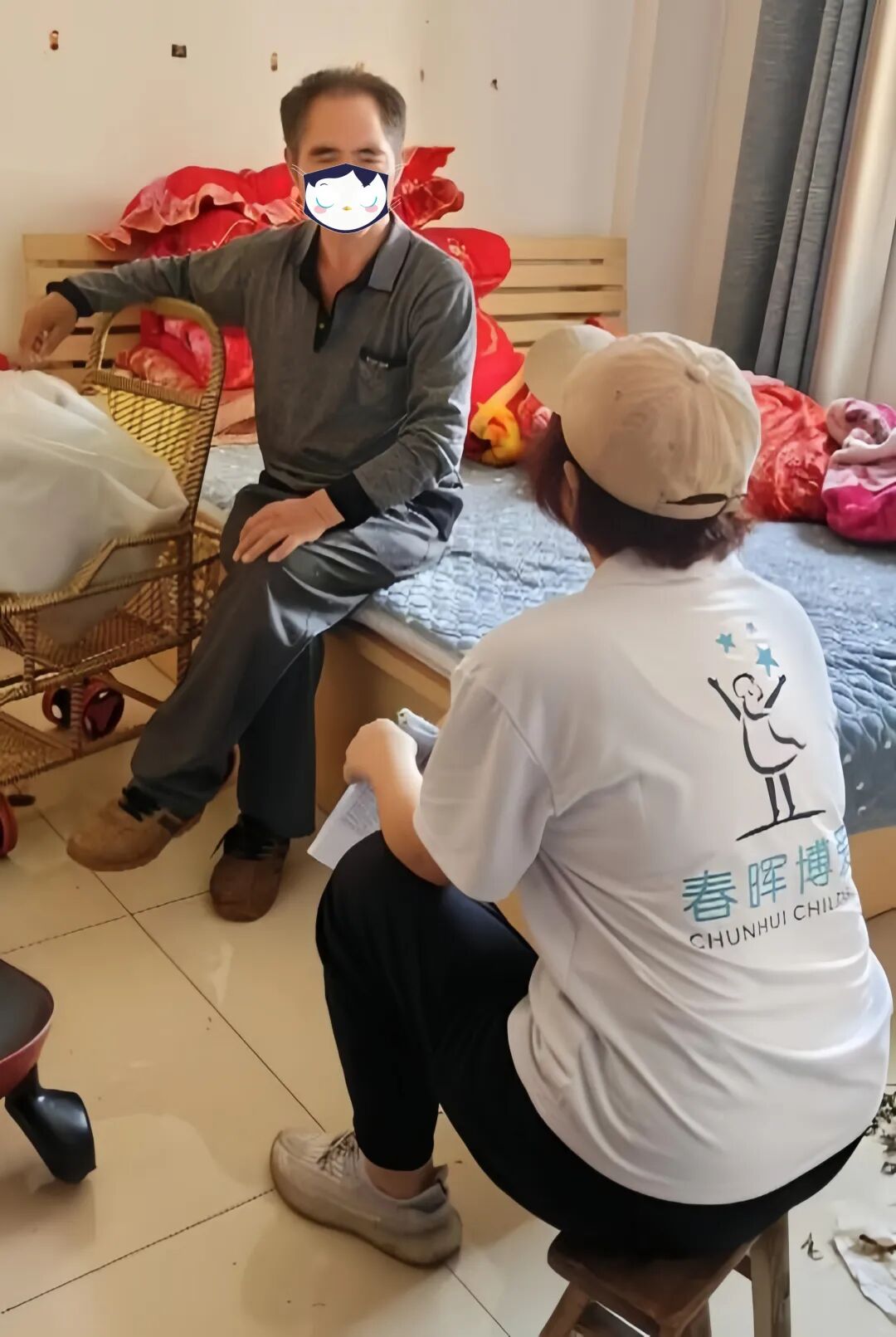
I tried to talk to Bai about what he liked and how school was going, but he kept his head down and shifted his feet restlessly, or shook his head, or babbled" um, um”. I felt as if my throat was blocked and had no idea how to step into his little closed-off world. Just as I stood there at a loss, Zhou Dan walked in. She squatted down, looked straight into Bai's eyes, and said in a voice gentle and firm: "Bai, could we chat for a moment, just the two of us?" Surprisingly, the boy who had resisted talking actually gave a small, quiet nod.
Zhou didn't rush to ask about the stealing. Instead, she took out some toys and started to play with Bai. Watching him gradually relax, Zhou asked softly, "Bai, do you like your uncle?" Bai's hands, busy with the toy, paused for a moment before he answered quietly, "Yes." "Do you think he works hard? He has to take care of you and his little grandson." At these words, Bai's eyes ran over with tears. He nodded and sobbed, "Uncle...... works so hard......a lot of work."
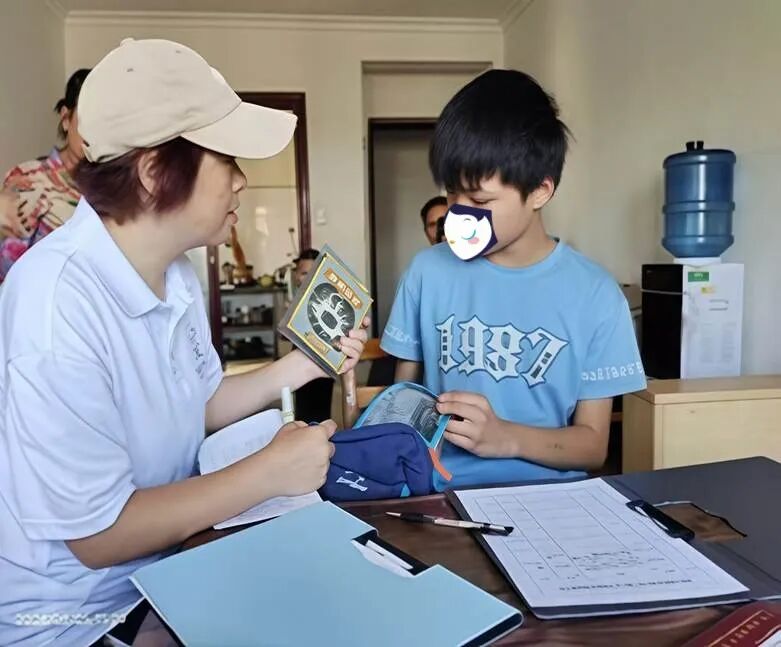
As they kept talking, Bai began to open up. He said he knew it was not right to steal, but he just couldn't help it — it felt as if only in that way could he get a little attention. When he talked about his aunt's blames, tears welled up in his eyes: "I want to behave too, but I don't know how…" Zhou Dan gently held his small hand and said softly, "You just wish to be cared about, don’t you?" Bai gave a firm nod, and the tears he'd been holding back finally fell.
2. Addressing problems to meet expectations
Following the home visit, Zhou Dan sat down with me and my fellow social workers to review Bai's challenges. "Timidness, low self-esteem, poor performances at school, insufficient social skills, addiction to screens, tense family relationships…" “What does Bai truly need to open up and become confident ?" asked Zhou
With this question in mind, we opened our notebooks and began to explore Bai's needs, bit by bit:
l Rebuilding trust and connection: For a long time, Bai has been in bad need of attention and always on guard against others. We must first build trusting relationship with him before getting to the root of his problematic behaviors. We cannot simply label his "stealing" and "phone addiction" as "bad habits."
l Redirecting behavioral cognition: Bai needs a basic understanding of moral norms, laws and regulations. He has to know which behaviors are unacceptable, and more importantly, learn to vent his negative emotions in appropriate ways, rather than go to the extremes.
l Enriching his life: We can use resources of the child-friendly spaces, involve Bai in various activities and help him develop interests so that he could leave his phone behind and have fun in other pastimes.
l Ripping off his negative labels: labels like “bad kid” and “freeloader” make Bai feel worse. We need find his strengths, help him establish a positive self-image and let him know that he deserves love too.
l Improving family environment: Bai’s Uncle is overwhelmed by the burdens of life and often finds faults with Bai. His belittlement and criticism, like cold water, dampens Bai's confidence. We need to provide the uncle with childcare & education guidance, and help him see Bai's efforts and replace blame with encouraging words.
l Stepping up joint efforts: Efforts of Chunhui children's social workers alone are far from enough. We need work with the schools and communities to give Bai all-round support.
3. Love brightens up the road ahead
Bai is like a star covered in dust. To make him shine again, we need to wipe away the dust bit by bit, and nourish him with love and patience. We decided to work with Bai’s family and community to help him regain confidence.
(1) Improving tense family relationship with love
Days later, together with Chunhui Children’s expert Zhao Wen and trainer Yao Juan, we visited Bai's home again. We brought board games and books. Seeing us, Bai said: "Hello, everyone!" "Aren't you going to invite us to sit, Bai?" I asked with a smile. He immediately got up to find stools, a long-awaited smile appearing on his face.
Talking about his new school term, Bai said he got new friends. His eyes sparkled with confidence as he spoke. "Bai, you like your uncle so much. Why don't you tell him, 'You've worked so hard, I love you,' and give him a hug?" Bai felt a bit shy at first. But then his uncle’s grandson bounced over and shouted: "I'll do it! Grandpa, you've worked so hard, I love you!" With those words, he threw himself into his grandpa’s arms.
Encouraged by the little boy, Bai walked up to his uncle, and said in a soft voice: "Uncle, you've worked so hard. I love you." His uncle froze for a moment, then his eyes turned red as he gave Bai a tight hug. "You've gotten a lot better lately. I am very happy about that," he said to Bai.
That evening, instead of the usual silence and depression — the living room was filled with laughter. From that day on, Bai no longer locked himself in his room all day, or stole from the shop; instead he started to help around the house on his own initiative, as the uncle said. Love can truly change a person.
(2) Bai walked out of his bedroom and enjoyed himself in the activity room
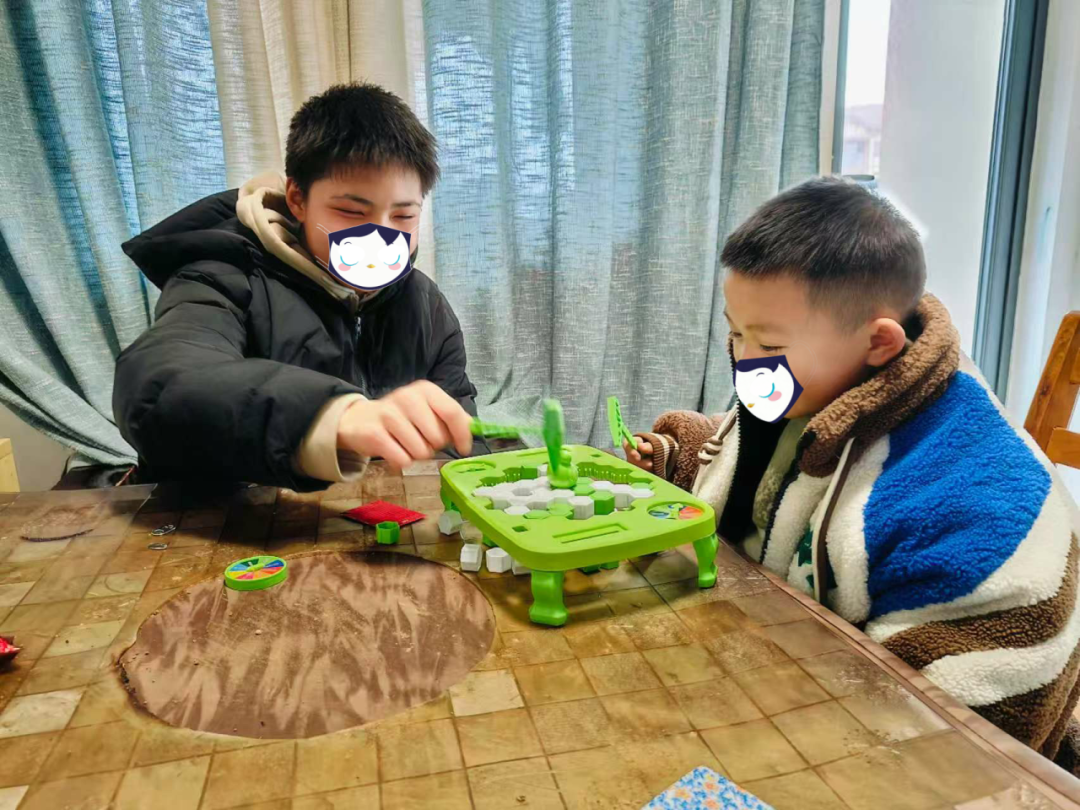
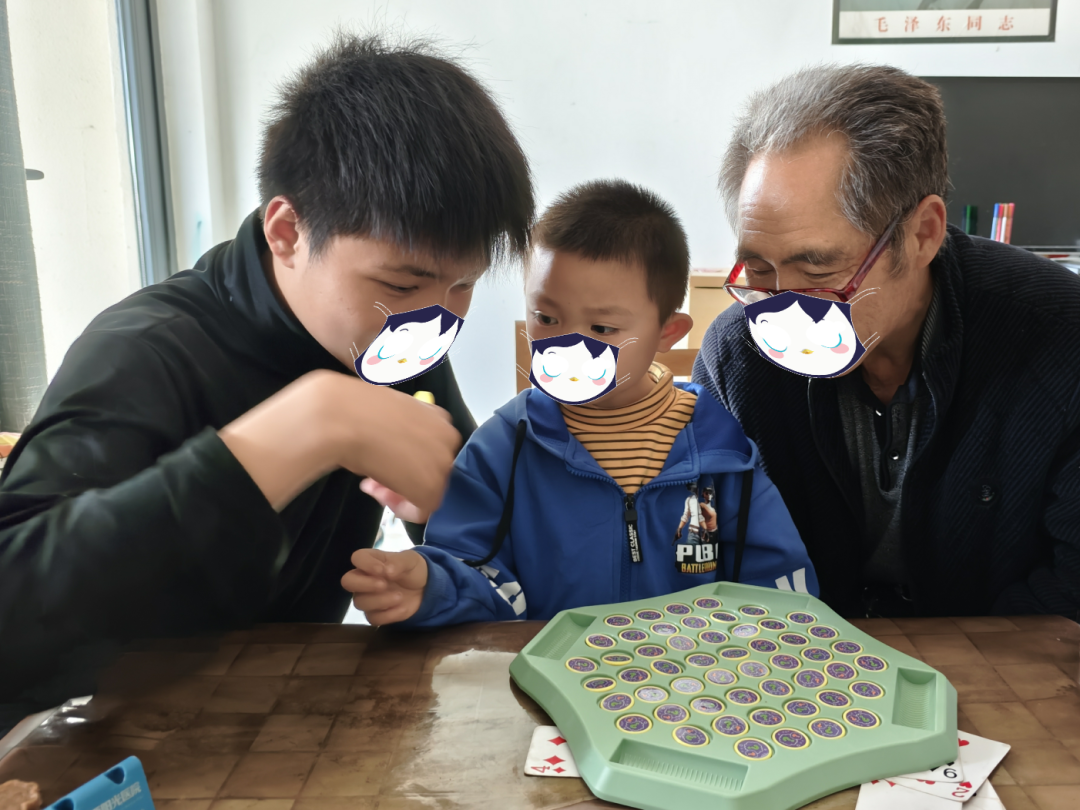
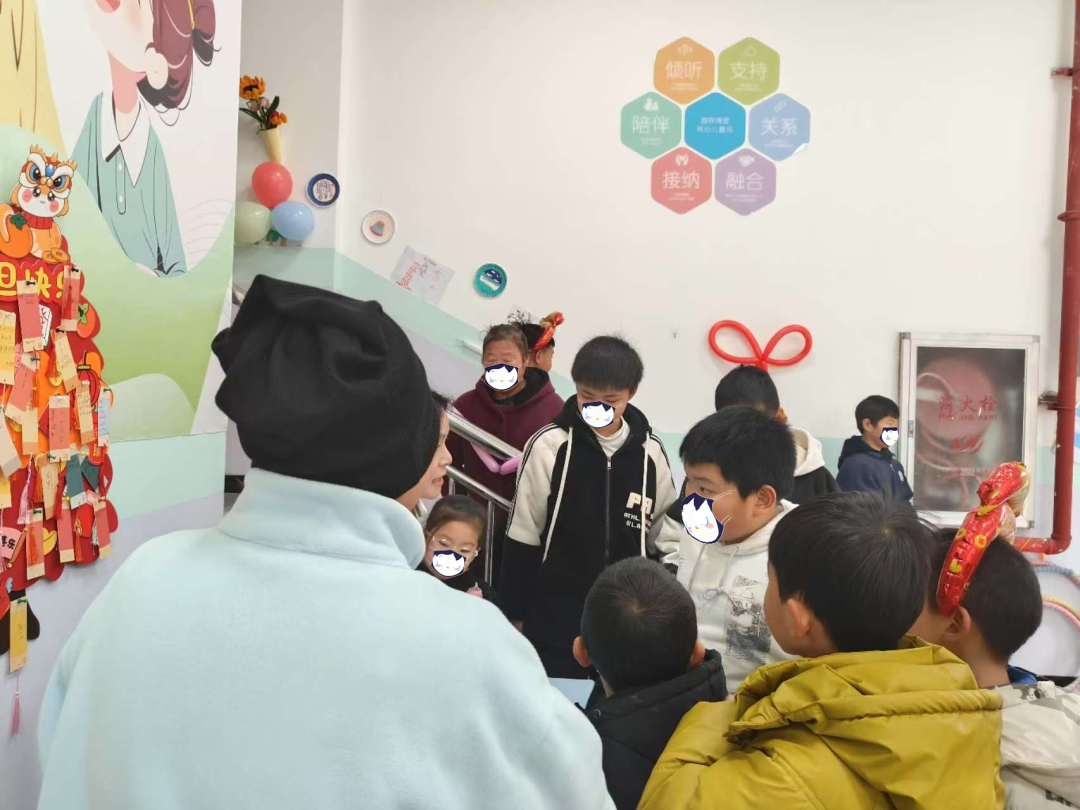
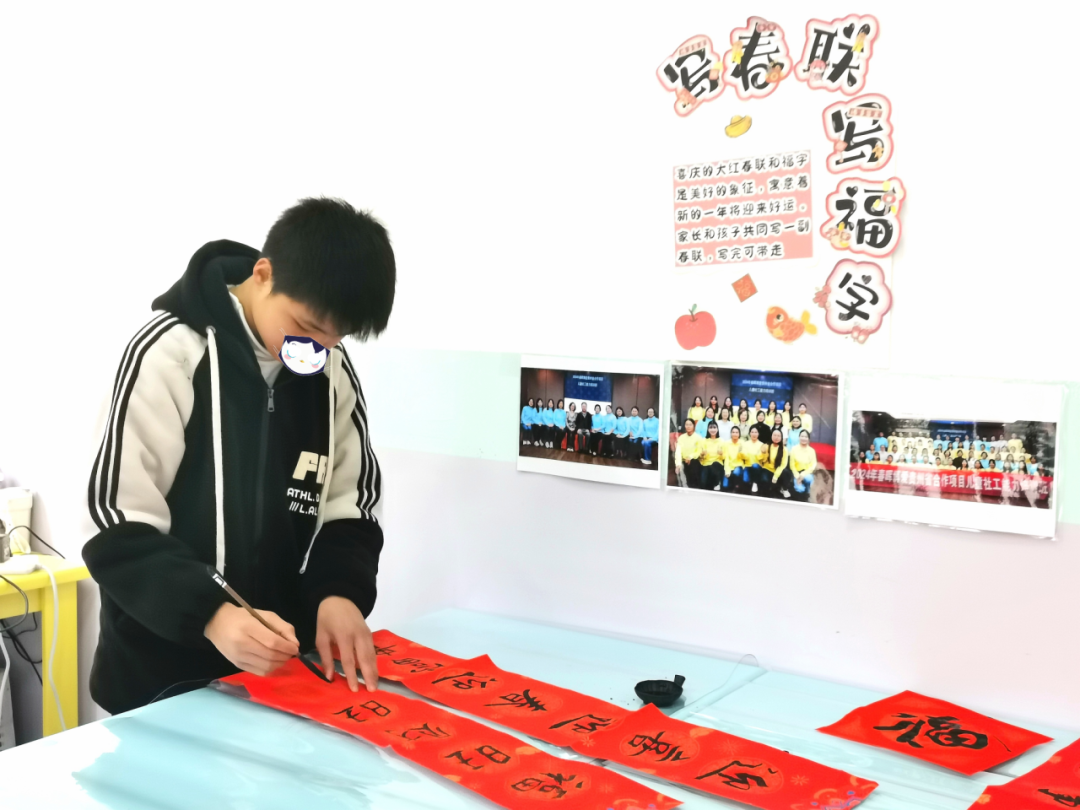
Seeing Bai slowly open up, I started to invite him to our child-friendly space. At first, I waited in the activity room for quite long but he didn’t come. Then I went to his home, trying to pick him up— time and time again......Finally, Bai followed me, together with his uncle and the uncle’s grandson, into the activity room and they even joined in our New Year's celebrations.
In the activity room, Bai was particularly enthusiastic. He participated in all activities, reading, hand-crafting, games...... his face always glowing with a smile. After the activities, I encouraged him to take home a few books he liked, and reminded him: "Remember to come back on weekends — we'll read and play together." Bai nodded, held the books in his arms, and walked away briskly. From then on, he became a regular visitor of the activity room and learned to get along with others. He was often seen reading and chatting with other children.
4. The boy’s transformation
We paid a dozen of visits to Bai's home, and recorded every bit of his progress with words and photos. And at that year’s summer camp, we were most impressed by a transformed Bai.
We invited Bai to our summer camp. On the afternoon we arrived, we took the children to the barbecue zone. The sunset glow spread across the grassland, and the aroma of grilled meat drifted around the tents. Bai bit into a skewer and said with a smile: "This is way more fun than scrolling on my phone at home."
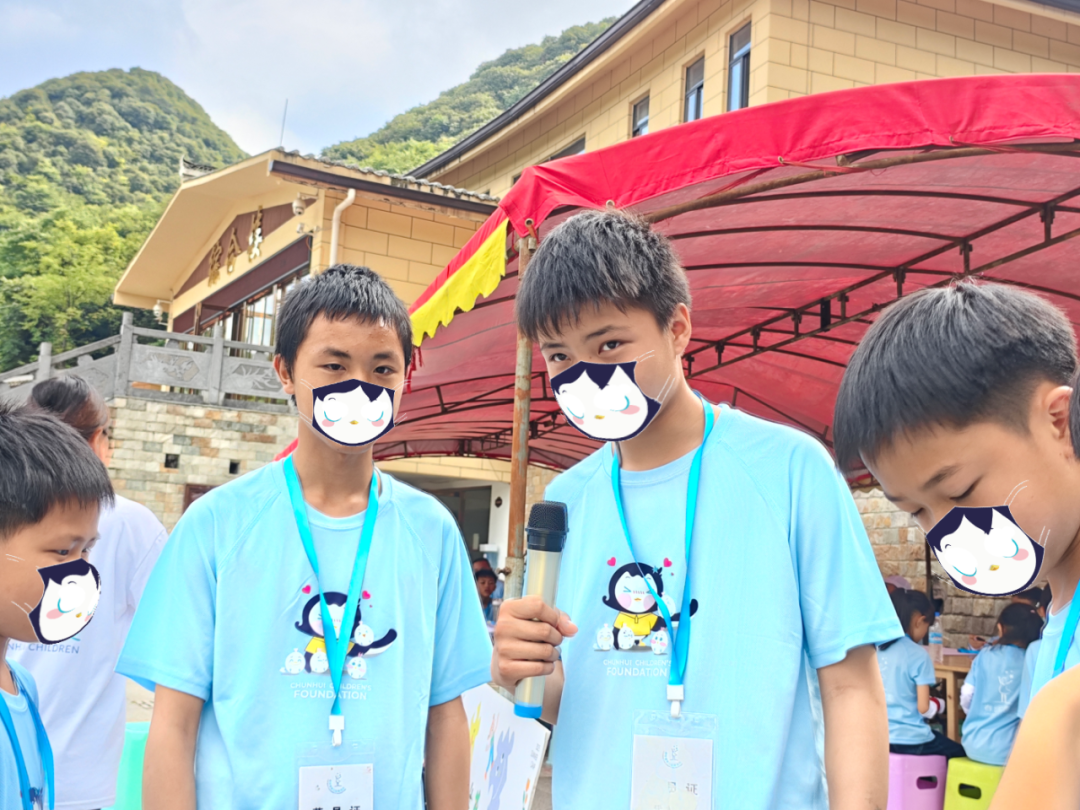
The next day, during the "Get to Know Yourself" activity, every child was asked to pick a leaf, then all their leaves were mixed up and they need to find their own from a shuffled pile. Holding the leaf he had chosen, Bai said earnestly: "Each leaf is different, just like me." In the painting session, he drew a bottle that was pouring water into a cup. Asked why he chose the bottle and cup, he said calmly: "Water is the source of life. My uncle is like the bottle, and I the cup. The bottle gives the cup water, the way my uncle gives me parent-like care. I want to grow with vitality, like water." At those words, I felt both glad and moved — that little withdrawn boy finally learned to be grateful and started to recognize himself.
At the summer camp, Bai also learned to take care of others. When lining up for meals, he noticed a little boy named Shuai standing behind him, so he took the boy’s hand and let him stand in front of him. When supplies were needed for an activity, Bai was always the first to move them to the activity site. Other children loved to gather around him, saying, "Brother Bai is so nice—he always helps us." When talking about the future, Bai said he wanted to join the army and grow into a helpful citizen. While the mentor explained the requirements for army enlisting, he listened with unusual attention, eyes full of expectations.
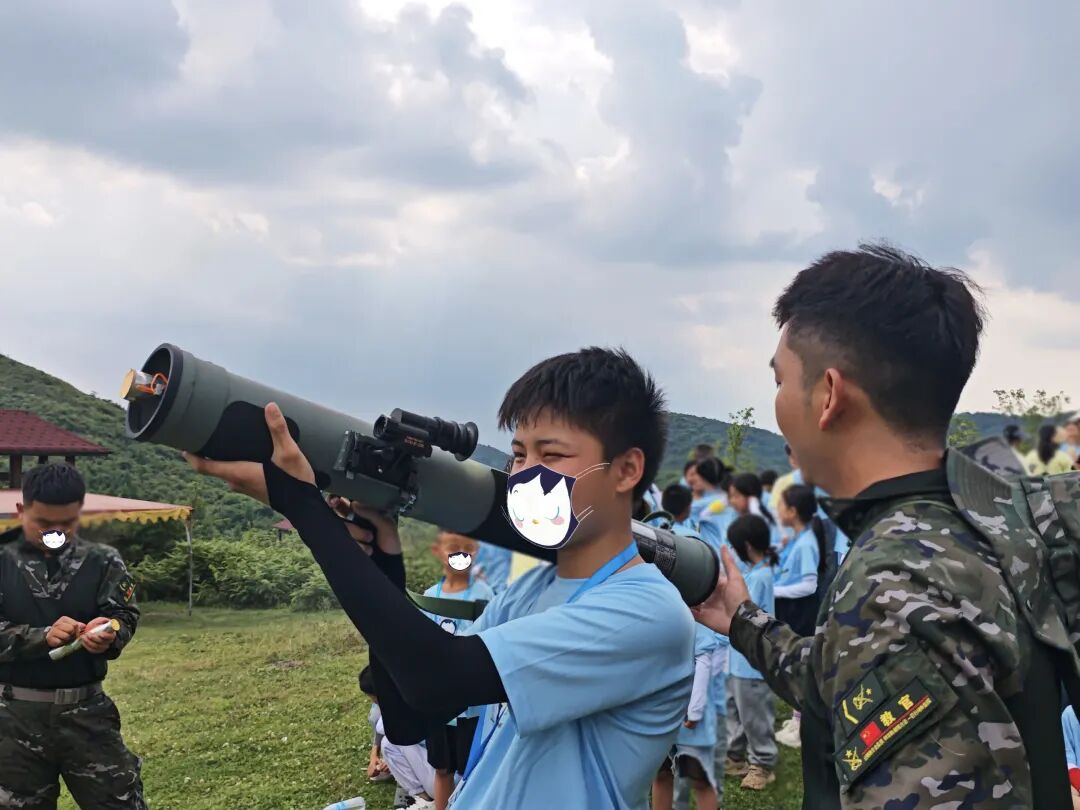
Today, Bai is no longer that silent boy who shut himself off from the outside world. He is confident, open, grateful, and has dreams of his own. Seeing him transform from a "withdrawn little creature" into a "responsible young man," we know all our efforts have paid off. This summer, Bai blossomed—and we grew with him too.